
Older gay men are one of the most underserved demographics in mental health. The specific pressures of aging in gay culture deserve more than a footnote.
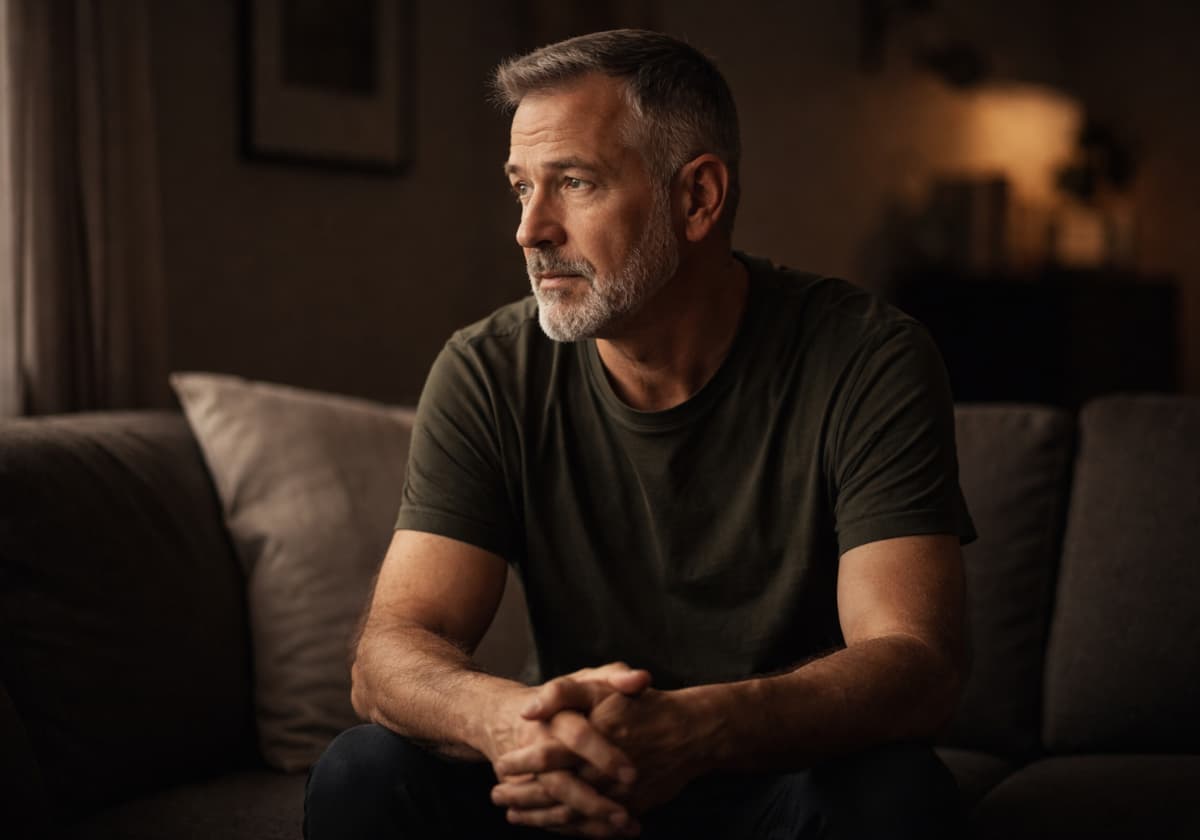
Thirty-five hits differently in gay time. It is the specific point at which many gay men begin to notice things shifting. The invitations slow down. The Grindr messages drop by half seemingly overnight. The spaces that once felt like home (the bars, the apps, the social events) start to feel like they’re designed for someone younger. And that person is no longer quite you.
Gay ageism is one of the least discussed features of gay culture. Most gay men over forty have stories, and most of those stories carry real pain. The community has not developed much language for it. Mainstream mental health has paid almost no systematic attention to the specific psychological terrain of the older gay man. That lack of attention is a clinical failure. For the men it affects, it is an additional burden. To be carrying something real and find no adequate framework for naming it is its own form of isolation.
Straight men age with models. They have seen their fathers and uncles and older colleagues do it. They know, in rough outline, what life might look like at fifty, at sixty, at seventy. The templates are imperfect. They exist. There are people who look like an older version of you, navigating the world, and they are visible and legible.
Gay men often don’t have those. A generation of potential role models was lost to AIDS. The gay culture that survived and grew was built, understandably, around the liberation of coming out, around youth, first relationships, the exploration that had been denied. The older gay man, in this cultural imagination, barely exists. He is certainly not aspirational. So there is no template for what it looks like to be a gay man at midlife or beyond. What relationships look like. What identity looks like. What a meaningful life looks like when you have built it without the structures straight men inherit by default.
“I went from being invisible because I was closeted to being invisible because I’m aging. I thought there’d be a sweet spot in between where I could just exist as myself. Turns out it lasted about three years.” A client, in session.
“Where men in their forties, fifties, and beyond find genuine connection has no easy answer right now. That is a structural absence, not a personal failing. And it remains workable from inside, even when the outside infrastructure is sparse.”
See how we work together →Within the broader population of older gay men, there is a specific clinical group deserving specific clinical attention: men who came of age during the AIDS epidemic and survived it. These men often carry layered grief for what was lost. Specific people. Entire networks. Forms of gay male culture that no longer exist. Many of them survived through forms of psychological compartmentalisation that were genuinely adaptive at the time and now have costs that have not been fully accounted for.
They frequently describe a particular form of isolation from younger gay men. The inability to share context that is formative for one generation and entirely abstract for the next. Having your history be historical rather than lived. Carrying something that does not transfer, that has no adequate recipient in your current social world.
The clinical work with this group has to start from the actual history. Generic grief models do not fit. They were built for individual loss, not collective loss at the scale of a generation.
There is something older gay men know that younger gay men do not yet. The capacity for reinvention. For rebuilding identity when the old one no longer fits. For finding new forms of self after previous versions become unavailable. For making a life from materials that the mainstream culture would not have offered. Gay men have been practising this, in various forms, from the start. Coming out is the first reinvention for most of us. It almost never turns out to be the last.
The psychological work at midlife and beyond often involves retrieving this capacity. The work is not competing with a culture that has moved on. It is naming with precision what actually matters at this particular point. What kind of connection. What kind of meaning. What kind of presence in the world. Then building toward that specifically, rather than mourning versions of it that are no longer available.
Go deeper: What Older Gay Men Know About Reinvention on Unfiltered Clarity →
Several structural reasons. Straight men age with visible models. They have seen fathers, uncles, and older colleagues navigate fifty, sixty, seventy. Gay men often do not have those references. A generation of potential role models was lost to AIDS. The gay culture that survived was built around youth. Gay ageism then means the spaces and relationships that once provided belonging become less available precisely when the need for connection is greatest. And many gay men have built relationship structures outside the default supports of marriage and extended family, which provide less institutional backing as they age.
Gay ageism is the systematic devaluing of older gay men within gay culture itself. It shows up as loss of sexual visibility, the thinning of invitations, the sense of becoming peripheral to community spaces that once felt like home. The mental health effects are specific. A double invisibility. A grief the community has no adequate language for. The particular weight of carrying a loss with no acknowledged social status. For older gay men, this is often experienced in silence, without any social ritual or community acknowledgement.
Men who came of age during the AIDS epidemic and survived it carry a specific psychological load. Many lost their entire social networks. The whole cohort gone. Many survived through forms of compartmentalisation that were genuinely adaptive at the time and have costs now. And many describe a particular isolation from younger gay men who have no direct reference point for what they lived through. The experience of carrying history that does not transfer. Of existing in a different temporal register from the men around them.
Yes, and it is significantly underacknowledged. Gay identity as it was understood in the early years of being out (built around coming out, first relationships, entering community) is calibrated for a specific life stage. At midlife or beyond, those frameworks often no longer apply. The community has moved on. The earlier identity markers no longer fit. There is almost no cultural template for what gay male identity looks like at fifty or sixty. The disorientation of outliving a version of yourself is real. It is not the same as having a problem with being gay.
Yes, but it needs to be therapy that understands the specific territory rather than applying generic frameworks to it. The psychological work at midlife and beyond often involves retrieving the capacity for reinvention gay men have been practising from the start. Naming with precision what actually matters at this particular point. Building toward that, rather than mourning versions of it no longer available. It also involves processing grief the culture has no adequate ritual for, and building connection in later life when the existing infrastructure was designed for younger men.
Ongoing therapy for gay men in the UK, Ireland, and select European countries, with specialist attention to midlife and beyond. Or The Formation Programme, six structured sessions and a written pattern map you keep, available worldwide.